Last updated: May 17, 2026
Quick Answer: Proper barbeque maintenance means cleaning grates after every cook, deep-cleaning the entire grill at least twice a year, checking burners and gas connections regularly, and storing the grill correctly between seasons. Grills that receive consistent care last significantly longer and perform more safely than neglected ones.
Key Takeaways
- Clean grill grates after every use while they’re still warm — it takes less than two minutes and prevents grease fires.
- Deep-clean the entire grill (grates, burners, grease tray, exterior) at least twice per year: once at the start of grilling season and once before winter storage.
- Inspect gas hoses and connections for cracks or leaks at the start of each season — a soapy water test is the simplest method.
- Season cast iron grates with cooking oil after each cleaning to prevent rust.
- Replace worn burners, igniters, and flavorizer bars before they fail, not after.
- A quality grill cover is one of the cheapest maintenance investments available.
- Charcoal grills need ash removal after every session to prevent moisture buildup and corrosion.
- Never use a wire brush with loose bristles on grates — bristles can break off and contaminate food.
- Budget roughly $20–$60 per year for consumable maintenance supplies (brushes, degreasers, replacement parts).
Why Does Barbeque Maintenance Actually Matter?
Consistent barbeque maintenance directly affects safety, food quality, and the lifespan of the grill. A neglected grill accumulates grease that can ignite unexpectedly, harbors bacteria on dirty grates, and corrodes faster due to moisture and residue buildup.
According to the National Fire Protection Association (NFPA), grills are involved in an average of 10,600 home fires per year in the United States, with failure to clean cited as a leading contributing factor (NFPA, 2021). Routine upkeep isn’t just about performance — it’s a genuine safety issue.
Who this guide is for: Anyone who owns a gas, charcoal, or pellet grill and wants to extend its life, cook safer food, and avoid expensive repairs.
What Are the Most Important Barbeque Maintenance Tips for Everyday Use?
The single most effective habit is cleaning grates right after cooking, while residual heat makes grease and char easy to remove. This one step prevents the majority of buildup problems.
After every cook:
- Brush grates with a coil-spring grill brush or a bristle-free alternative (crumpled aluminum foil works in a pinch).
- Empty and wipe the grease tray or drip pan — this is the most common fire ignition point.
- Close the lid and let the grill cool completely before covering it.
Common mistake: Waiting until the next cookout to clean. Grease hardens and carbonizes overnight, making it far harder to remove later.
How Often Should a Grill Be Deep-Cleaned?
A full deep-clean should happen at minimum twice per year — once in spring before the season begins, and once in fall before storage. Frequent grillers (weekly or more) benefit from a mid-season clean as well.
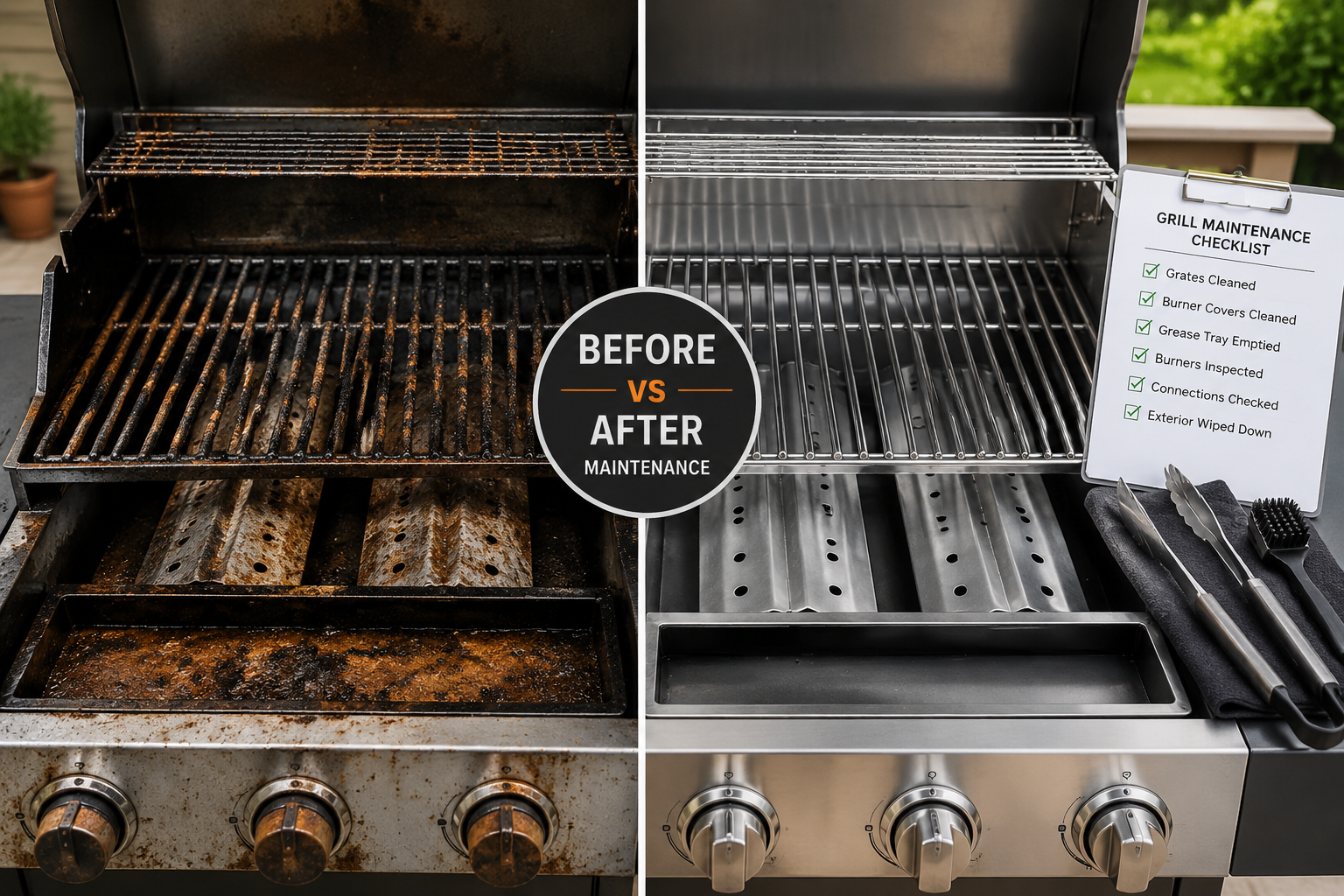
Deep-clean checklist:
| Component | Cleaning Method | Frequency |
|---|---|---|
| Grill grates | Soak in warm soapy water, scrub, rinse | Every 1–2 months |
| Burners (gas) | Brush ports with a wire brush, clear clogs with a toothpick | Twice per year |
| Grease tray/drip pan | Scrape, wash with degreaser | Monthly or as needed |
| Firebox/interior | Scrape carbon buildup, wipe with damp cloth | Twice per year |
| Exterior | Wipe with stainless steel cleaner or mild soap | Monthly |
| Flavorizer bars | Scrape and inspect for rust or holes | Twice per year |
Edge case: In humid coastal climates, increase exterior cleaning to monthly and inspect for rust more frequently — salt air accelerates corrosion significantly.
How Do You Clean and Season Grill Grates Properly?
Cast iron and stainless steel grates require slightly different care. Both benefit from seasoning, but cast iron demands it to prevent rust.
For cast iron grates:
- Scrub with a stiff brush after each cook.
- Rinse with warm water (avoid soap when possible — it strips seasoning).
- Dry completely with a cloth or low oven heat.
- Apply a thin coat of high-smoke-point oil (flaxseed, canola, or vegetable oil) with a paper towel.
- Heat the grill for 15 minutes to bond the oil layer.
For stainless steel grates:
- Soap and water are fine for stainless.
- Dry thoroughly after washing to prevent water spots and surface rust.
- A light oil coat after cleaning still helps prevent sticking.
Choose cast iron if you want superior heat retention and sear marks. Choose stainless if you prefer lower maintenance and easier cleaning.
What Gas Grill Maintenance Steps Prevent Safety Issues?
Gas grill safety depends on the condition of hoses, connections, and burners. A blocked burner port or cracked hose can cause uneven flames, flare-ups, or gas leaks.
Annual safety checks for gas grills:
- Hose inspection: Look for cracks, brittleness, or kinks along the entire length of the gas hose.
- Leak test: Mix dish soap with water and brush it over all connections. Bubbles indicate a leak. If bubbles appear, turn off the gas immediately and replace the faulty part before using the grill.
- Burner inspection: Remove burners and clear clogged ports with a toothpick or thin wire. Uneven flame patterns (yellow or orange instead of blue) signal blockages.
- Igniter check: Test the igniter at the start of each season. Replace batteries in electronic igniters annually.
- Venturi tubes: Check for spider webs or insect nests inside the venturi tubes — a surprisingly common issue that causes burner problems.
💡 Quick tip: Always open the grill lid before igniting a gas grill. Lighting with the lid closed traps gas and can cause a dangerous pressure buildup.
How Should a Charcoal Grill Be Maintained?
Charcoal grills are simpler mechanically, but ash and moisture are their biggest enemies. Proper ash management and rust prevention are the core barbeque maintenance tips for charcoal users.
After every charcoal session:
- Allow ash to cool completely (at least 48 hours) before disposal.
- Remove all ash from the bowl — wet ash is highly corrosive to steel.
- Wipe the interior with a dry cloth.
Seasonally:
- Inspect the bowl and lid for rust spots. Sand lightly and apply high-heat paint if found.
- Check that vents open and close smoothly — stuck vents make temperature control impossible.
- Inspect the grate for warping or rust.
What Supplies Are Needed for Effective Grill Maintenance?
A basic maintenance kit doesn’t require much investment. Here’s what to keep on hand:
| Supply | Purpose | Estimated Cost |
|---|---|---|
| Bristle-free grill brush | Safe grate cleaning | $10–$25 |
| Grill degreaser spray | Breaking down grease buildup | $8–$15 |
| High-heat cooking oil | Seasoning grates | Already in most kitchens |
| Microfiber cloths | Wiping surfaces | $5–$10 |
| Stainless steel cleaner | Exterior shine and protection | $8–$12 |
| Grill cover (fitted) | Weather protection | $20–$60 |
| Replacement burners/igniters | Proactive part replacement | $15–$40 each |
Total annual spend for consumables: roughly $30–$60, which is a fraction of the cost of replacing a grill prematurely.
How Should a Grill Be Stored for Winter or Off-Season?
Off-season storage is one of the most overlooked barbeque maintenance tips. A grill left uncovered through winter can age years in a single season.
Before storing:
- Do a full deep-clean (grates, interior, exterior).
- Disconnect and store propane tanks separately in a well-ventilated outdoor area — never inside a garage or home.
- Coat cast iron components with a thin layer of cooking oil.
- Cover all openings with aluminum foil or plastic wrap to block insects and moisture.
- Place a fitted, weather-resistant cover over the entire grill.
- Store in a sheltered location (garage, shed, covered patio) if possible.
For charcoal grills: Store indoors if the unit is small enough. Moisture is the primary threat, so a dry environment matters more than temperature.
FAQ: Barbeque Maintenance Tips
Q: How often should grill grates be replaced? Cast iron grates last 5–10 years with proper care. Stainless grates can last longer. Replace them when they show deep rust, significant warping, or structural damage that cleaning can’t fix.
Q: Can a grill be cleaned with oven cleaner? Oven cleaner works on grates but should be used carefully — it’s caustic and can damage painted or coated surfaces. Rinse thoroughly before cooking. A dedicated grill degreaser is generally safer and sufficient.
Q: Is it safe to use a wire brush on grill grates? Traditional wire brushes with bristles pose a risk: loose bristles can embed in grates and end up in food. Use a coil-spring brush, a bristle-free brush, or crumpled aluminum foil instead.
Q: How do you remove heavy rust from grill grates? Soak grates in a 50/50 white vinegar and water solution for 1–2 hours, then scrub with a stiff brush. For severe rust, use a rust remover rated for food-contact surfaces, rinse thoroughly, and re-season immediately.
Q: Does a grill cover cause rust? A cover that traps moisture can accelerate rust. Use a cover with ventilation vents, and make sure the grill is completely dry before covering it. Breathable covers are better than fully sealed vinyl.
Q: How do you know when a gas burner needs replacing? Replace burners when they show visible holes, severe corrosion, or produce an uneven flame that cleaning doesn’t fix. Burners typically last 3–5 years depending on use frequency and material quality.
Q: What’s the best way to clean a grease trap? Line the grease trap with aluminum foil for easy cleanup. When full, remove the foil and replace it. For built-up grease, soak in hot soapy water and scrub with a stiff brush.
Q: Can barbeque maintenance extend the life of a cheap grill? Yes. A budget grill that’s cleaned regularly and stored properly will outlast a premium grill that’s neglected. Maintenance matters more than initial quality in many cases.
Conclusion: Build a Simple Maintenance Routine
The best barbeque maintenance tips share a common thread: consistency beats intensity. A two-minute brush after every cook and a proper deep-clean twice a year will do more for a grill’s longevity than a single marathon cleaning session once every few years.
Actionable next steps:
- This week: Buy a bristle-free grill brush and a can of degreaser if you don’t already have them.
- This month: Do a full inspection of burners, hoses, and grates.
- This season: Set a calendar reminder for a deep-clean at the start and end of grilling season.
- Ongoing: Clean grates after every cook and empty the grease tray regularly.
A well-maintained grill is safer, produces better-tasting food, and lasts years longer. The investment in time and supplies is minimal compared to the cost of replacing equipment — or dealing with a preventable fire.
References
- National Fire Protection Association (NFPA). (2021). Home Fires Involving Grills, Hibachis, or Barbeques. https://www.nfpa.org/education-and-research/research/nfpa-research/fire-statistical-reports/grills
Leave a Reply