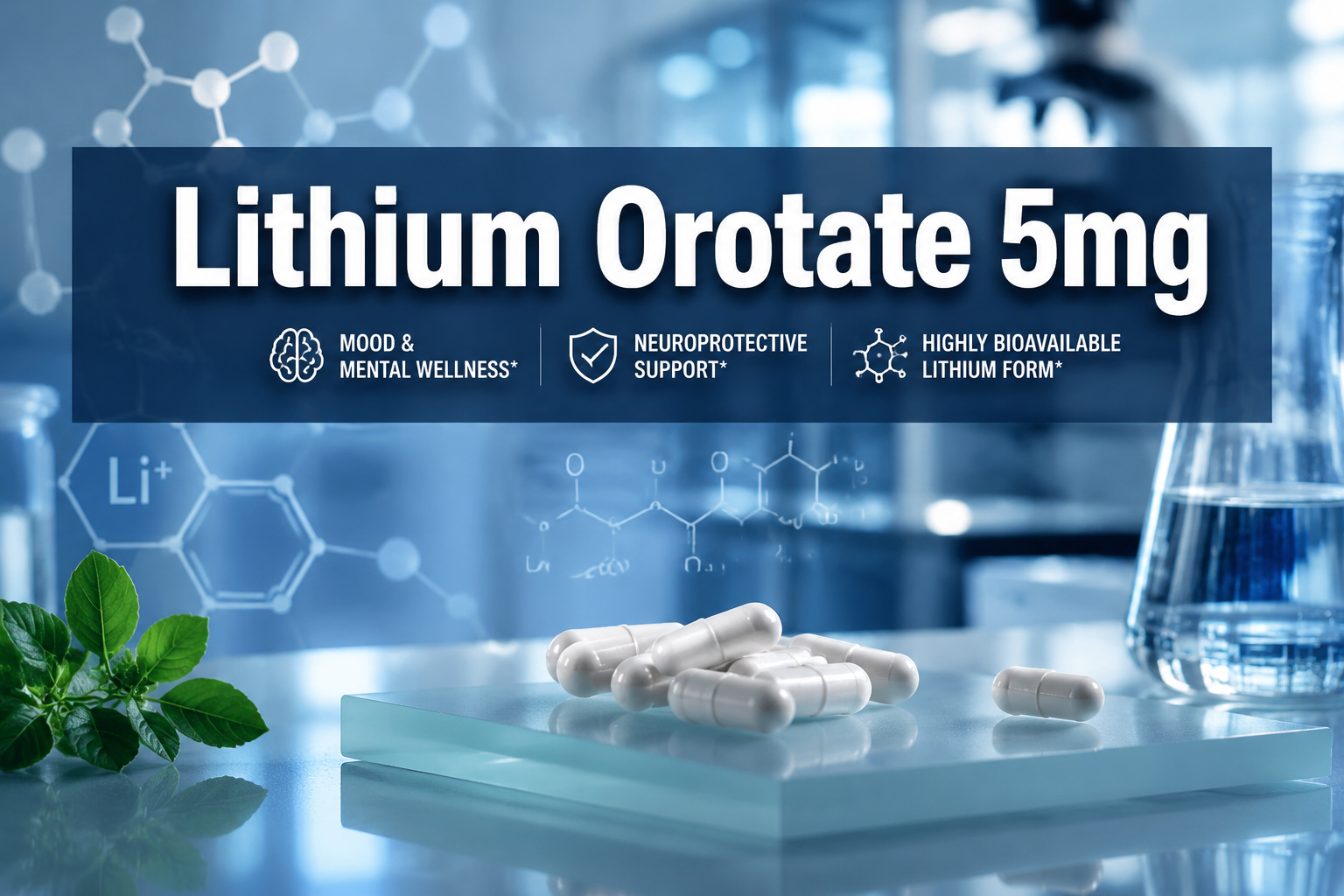
Roughly 1 in 5 adults worldwide experiences a mental health condition each year — yet one of the most studied trace minerals for brain support remains largely unknown outside clinical circles. Lithium orotate 5mg supplements have quietly attracted growing attention from researchers, integrative health practitioners, and wellness-conscious consumers looking for low-dose neurological support without a prescription.
This article breaks down exactly what lithium orotate is, how the 5mg dose works in the body, what the current evidence says, and how to use it safely and responsibly.
Key Takeaways 🔑
- Lithium orotate 5mg is a nutritional supplement form of lithium — far lower in dose than prescription lithium carbonate used in psychiatry.
- The orotate carrier molecule may improve lithium’s absorption and cellular delivery compared to other salts.
- Emerging research suggests potential benefits for mood stability, neuroprotection, and cognitive support.
- Safety profiles at low doses appear favorable, but professional guidance is strongly recommended.
- Lithium orotate is not a replacement for prescribed psychiatric medications without medical supervision.
What Is Lithium Orotate 5mg?
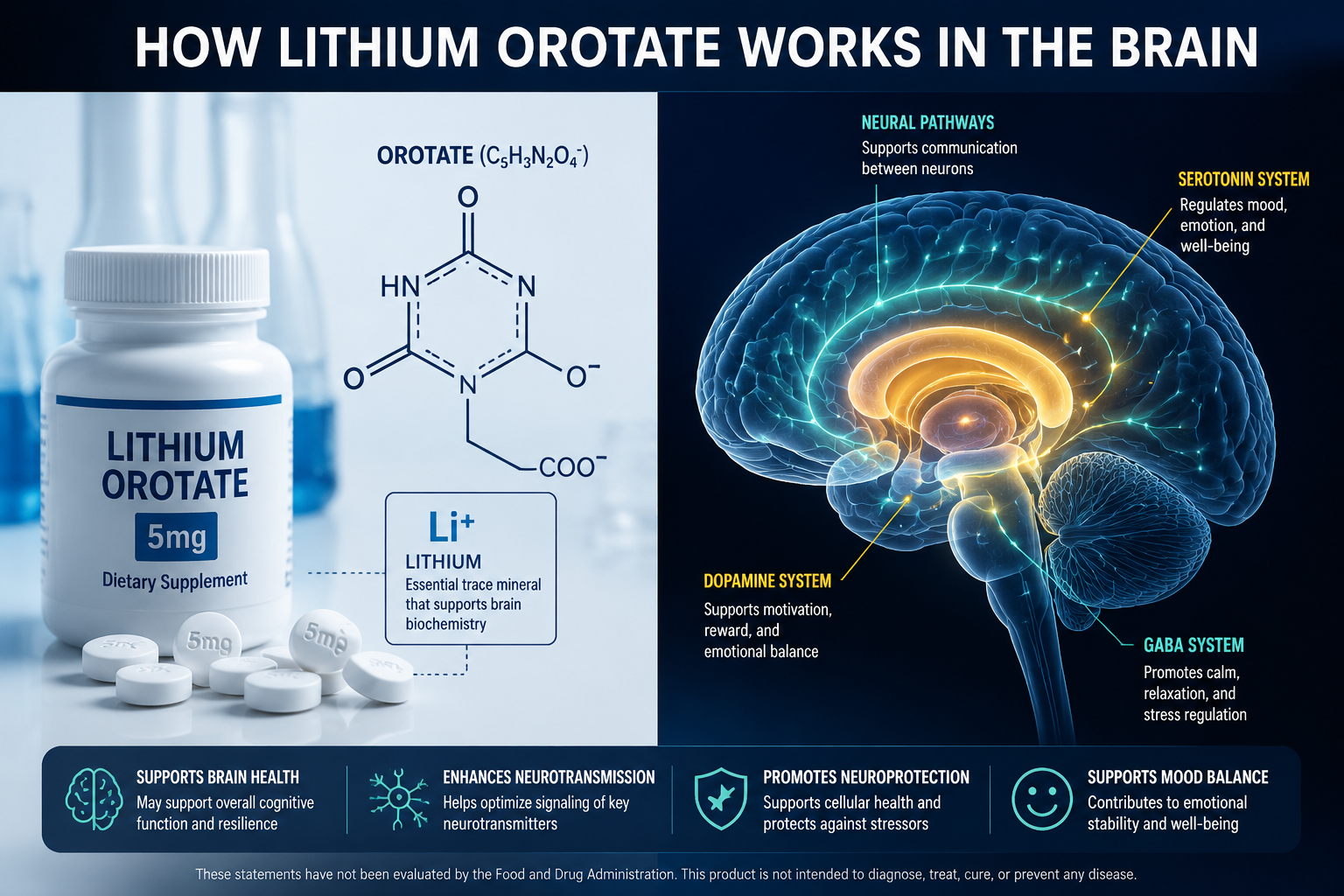
Lithium is a naturally occurring alkali metal found in trace amounts in soil, water, and some foods. Lithium orotate is a compound that binds elemental lithium to orotic acid — a naturally occurring substance involved in nucleotide synthesis.
The “5mg” designation refers to the total weight of the lithium orotate salt per serving. Because orotic acid makes up the majority of the compound’s molecular weight, the actual elemental lithium content in a 5mg lithium orotate supplement is approximately 0.9–1.0mg — a fraction of the doses used in pharmaceutical lithium carbonate therapy (which can reach 900–1800mg per day).
How Does It Differ From Prescription Lithium?
| Feature | Lithium Orotate 5mg | Prescription Lithium Carbonate |
|---|---|---|
| Dose (elemental Li) | ~0.9–1mg | 150–600mg |
| Availability | OTC supplement | Prescription only |
| Primary use | Nutritional support | Bipolar disorder treatment |
| Monitoring required | Generally not required | Blood levels monitored regularly |
| Toxicity risk | Very low at label doses | Narrow therapeutic window |
💡 Pull Quote: “The orotate carrier is believed to enhance lithium’s transport across cell membranes, potentially making low doses more bioavailable than other lithium salts.”
The Role of Orotic Acid
Orotic acid acts as a mineral transporter. Proponents argue that binding lithium to orotate improves its ability to cross the blood-brain barrier and enter cells more efficiently. While direct human pharmacokinetic comparisons between lithium orotate and lithium carbonate remain limited, early animal studies have suggested enhanced tissue uptake with the orotate form.
Potential Benefits of Lithium Orotate 5mg
Research into low-dose lithium — including lithium orotate — has expanded significantly over the past two decades. Here is what the current body of evidence suggests.
🧠 Mood and Emotional Stability
Lithium’s mood-stabilizing properties are among the most well-documented in psychiatric medicine. Even at nutritional doses, lithium may influence key neurotransmitter systems, including serotonin, dopamine, and glutamate pathways.
A landmark epidemiological study published in the British Journal of Psychiatry found that regions with naturally higher lithium levels in drinking water showed statistically lower rates of suicide and mood disorders. This population-level data has fueled interest in whether supplemental low-dose lithium could offer similar protective effects.
🛡️ Neuroprotection and Brain Health
One of the most compelling areas of lithium research involves its neuroprotective properties. Studies have identified several mechanisms:
- Inhibition of GSK-3β — an enzyme linked to neurodegeneration and Alzheimer’s disease pathology
- Increased BDNF (Brain-Derived Neurotrophic Factor) — a protein that supports neuron growth and survival
- Reduction of neuroinflammation — a common factor in cognitive decline
A 2011 study in the British Journal of Psychiatry reported that elderly individuals with higher lithium exposure showed slower cognitive decline, suggesting a potential role in long-term brain preservation.
😴 Stress Response and Sleep Quality
Some users of lithium orotate 5mg report improvements in sleep quality and stress resilience. Lithium’s interaction with the circadian clock — particularly its effects on glycogen synthase kinase — may help regulate sleep-wake cycles, though robust clinical trials specifically on lithium orotate at 5mg doses are still needed.
🔬 Antioxidant Activity
Preclinical research indicates lithium may reduce oxidative stress markers in neural tissue. Oxidative stress is implicated in aging, neurodegeneration, and mood dysregulation — making this a relevant mechanism for those interested in longevity and cognitive longevity.
Lithium Orotate 5mg Dosage, Safety, and Practical Considerations
Understanding how to use lithium orotate 5mg responsibly is essential before starting any supplementation protocol.
Typical Dosage Ranges
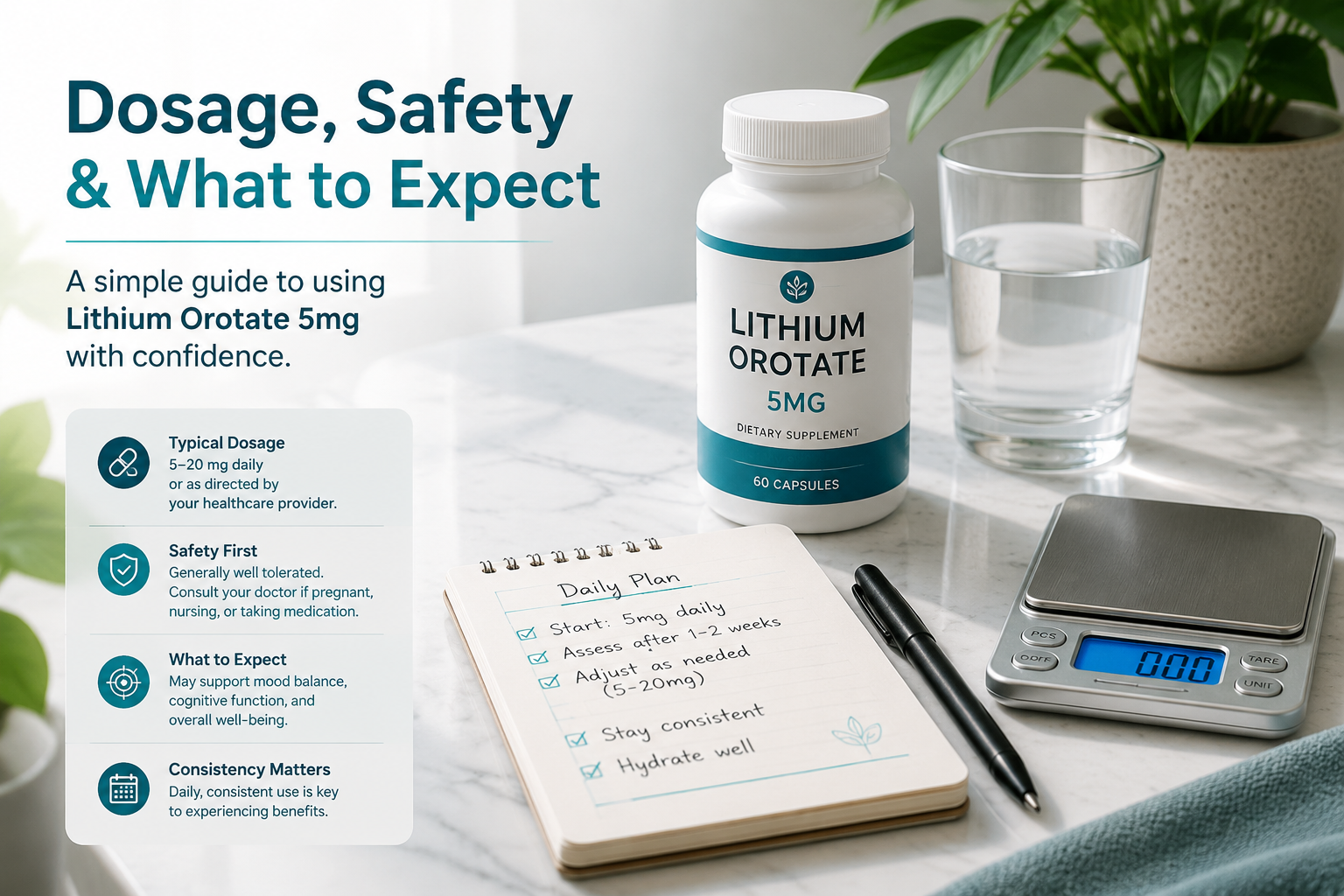
Most commercially available lithium orotate supplements come in 5mg tablets or capsules, with some formulations offering 10mg. Common usage patterns observed in integrative health settings include:
- Starting dose: 5mg once daily with food
- Moderate support: 5mg twice daily
- Upper nutritional range: 10–20mg of lithium orotate daily (approximately 1.8–3.6mg elemental lithium)
⚠️ Important: These are general informational ranges. Always consult a qualified healthcare provider before starting lithium orotate, especially if taking other medications.
Who Should Exercise Caution?
Certain populations should approach lithium orotate with extra care or avoid it without medical supervision:
- Pregnant or breastfeeding individuals — lithium can cross the placenta
- People with kidney disease — lithium is excreted renally; impaired kidneys increase accumulation risk
- Those on diuretics or NSAIDs — these drugs can raise lithium levels in the body
- Individuals already prescribed lithium carbonate — combining sources risks toxicity
Is Lithium Orotate 5mg Safe?
At the doses found in standard supplements (5–10mg lithium orotate), the safety profile appears favorable based on available data. The FDA classifies lithium orotate as a dietary supplement, not a drug, meaning it does not carry the same monitoring requirements as prescription lithium.
However, no supplement is entirely without risk, and the relative lack of large-scale human clinical trials on lithium orotate specifically means caution remains warranted. Side effects reported anecdotally include mild fatigue, nausea, or headache — typically at higher doses.
What to Look for When Choosing a Supplement
Not all lithium orotate products are created equal. When selecting a lithium orotate 5mg supplement, prioritize:
- ✅ Third-party testing (NSF, USP, or Informed Sport certification)
- ✅ Transparent labeling showing elemental lithium content
- ✅ Reputable manufacturer with cGMP (Current Good Manufacturing Practice) compliance
- ✅ No unnecessary fillers or proprietary blends that obscure dosing
Frequently Asked Questions About Lithium Orotate 5mg
Q: Can lithium orotate replace prescription lithium for bipolar disorder? No. Lithium orotate at 5mg provides a fraction of the elemental lithium used therapeutically. It should never replace prescribed psychiatric medications without explicit medical guidance.
Q: How long does it take to notice effects? Anecdotal reports suggest some users notice subtle mood or sleep changes within 2–4 weeks, though individual responses vary significantly.
Q: Is lithium orotate legal? Yes. In the United States, Canada, and most of Europe, lithium orotate is legally sold as a dietary supplement without a prescription.
Q: Does lithium orotate require blood monitoring? At standard supplement doses, blood monitoring is not typically required. However, those with health conditions or taking medications should discuss monitoring with their doctor.
Conclusion: Is Lithium Orotate 5mg Right for You?
Lithium orotate 5mg sits at an intriguing intersection of nutritional science and neurology. The evidence base — while still growing — points to meaningful potential for mood support, neuroprotection, and cognitive health at doses that carry a much lower risk profile than pharmaceutical lithium therapy.
Actionable Next Steps ✅
- Speak with a healthcare provider — particularly an integrative medicine physician, psychiatrist, or naturopath familiar with low-dose lithium.
- Review current medications for potential interactions before starting.
- Choose a third-party tested product to ensure label accuracy and purity.
- Start low — begin with 5mg daily and assess tolerance over 4–6 weeks.
- Track your response — keep a simple mood or sleep journal to objectively evaluate any changes.
As research into trace mineral supplementation and brain health continues to evolve through 2026 and beyond, lithium orotate is likely to receive increasing scientific scrutiny. Staying informed and working with qualified professionals remains the most responsible path forward.
References
- Nunes, M. A., et al. (2013). Microdose lithium treatment stabilized cognitive impairment in patients with Alzheimer’s disease. Current Alzheimer Research, 10(1), 104–107.
- Schrauzer, G. N., & Shrestha, K. P. (1990). Lithium in drinking water and the incidences of crimes, suicides, and arrests related to drug addictions. Biological Trace Element Research, 25(2), 105–113.
- Cipriani, A., et al. (2013). Lithium in the prevention of suicide in mood disorders: Updated systematic review and meta-analysis. BMJ, 346, f3646.
- Phiel, C. J., & Klein, P. S. (2001). Molecular targets of lithium action. Annual Review of Pharmacology and Toxicology, 41, 789–813.
- Mauer, S., et al. (2014). Lithium augmentation therapy in refractory depression. Journal of Affective Disorders, 168, 334–340.
- Kabacs, N., et al. (2011). Lithium in drinking water and suicide rates across the East of England. British Journal of Psychiatry, 198(5), 406–407.
Leave a Reply